Cómo perfeccionar un idioma: 7 consejos prácticos y divertidos

Aprender un idioma es un reto interesante y muy productivo.

Pero, a veces,  el miedo a no saber elegir la palabra adecuada, conjugar mal un verbo o pronunciar de manera incorrecta puede hacer que nos bloqueemos, nos sintamos mal y abandonemos este interesante proyecto.

Improve your language skills

¿Quieres saber por qué surgen estas dificultades?

Fundamentalmente, porque aprender un idioma desafía a tu mente (tu cerebro tiene que crear nuevos marcos cognitivos) y al tiempo (requiere una práctica sostenida y constante).

Además, a veces nos empeñamos en memorizar un montón de palabras y reglas para hablar un idioma, y esto es un error importante: de esta forma, obtenemos el conocimiento del “idioma como objeto”, pero encontramos problemas a la hora de ponerlo en práctica y utilizarlo. 

Sin embargo, y aunque tiene sus dificultades, estudiar idiomas puede ser entretenido y satisfactorio.

Solo debes recordar que  tu objetivo principal debe ser adquirir nuevas habilidades comunicativas, además de la gramática.

Tener esto en mente también puede ayudarte a perfeccionar el idioma que estás aprendiendo.

improve your language skills

Nuestra recomendación es que te plantees estas preguntas:

  • ¿Por qué estás aprendiendo este idioma?
  • ¿Es por motivos profesionales, por placer o para comunicarte con tu familia?
  • ¿Cuánto tiempo quieres dedicar al aprendizaje?

Respondiendo a ellas, podrás buscar oportunidades y fórmulas para aprender aquello que necesitas o que más te motiva.

Además de los cursos de español en Taronja, tenemos algunos trucos prácticos que pueden ayudarte a mejorar tu español.

Algunos de ellos son:

1. Realiza videollamadas o inicia conversaciones de chat en español. Es una opción sencilla, barata y puede ayudarte a vencer tu timidez.

2. Intenta leer periódicos en español. ¡Incluso puedes hacer un pequeño resumen de noticias cada mañana para estar bien informado!

3. Escucha podcast en español mientras haces deporte o mientras paseas por Valencia. Elige programas interesantes y, haz tu propia lista y ¡compártela con nosotros!

4. Canta canciones en otro idioma. Puedes ir a un karaoke o hacerlo en tu casa, mientras te duchas, limpias o cocinas.

5. Aprende a cocinar utilizando vídeo-recetas en español. Y no solo hablamos de ponerte frente a los fogones: también puedes practicar al hacer listas de ingredientes, ir a la compra, aprender técnicas de cocina, etc. Si tienes dudas, nuestro Chef Nando puede ayudarte.

6. Haz intercambio de idiomas. Esta opción es muy interesante para mejorar tu nivel de conversación y tu pronunciación, y también para poner en práctica lo que aprendes en tus clases de español. Además, es una buena forma de hacer amigos y de conocer gente con intereses parecidos a los tuyos.

7. Rodéate de recursos en español. Si vienes Taronja, ¡eso está hecho! Todas nuestras clases y actividades son en español para que vivas una experiencia «totalmente  inmersiva» y aprendas nuestro idioma de manera rápida y más sencilla.

Información de contacto
Política de privacidad / Privacy policy

Últimas noticias de Taronja School


Con nuestros cursos puedes mejorar tu expresión oral y aprender de una forma divertida y amena cómo somos los españoles.

Apostamos por la transformación digital 1
Apostamos por la transformación digital

Tecnología al servicio de las personas: así mejoramos cada día en Taronja En Taronja seguimos avanzando con paso firme hacia un modelo más moderno, sostenible y conectado. Con el apoyo del programa “Última Milla”, impulsado por la Secretaría de Estado de Turismo y financiado por la Unión Europea – NextGenerationEU, hemos desarrollado un proyecto de digitalización que marca un antes y un después en nuestro centro Taronja School. Ecosistema digital Gracias a este proyecto hemos implantado un ecosistema digital completo que mejora nuestra forma de trabajar y, sobre todo, la experiencia de quienes nos eligen para aprender español en Valencia. Hemos conectado herramientas que nos ayudan a entender mejor las necesidades de nuestros estudiantes, gestionar la información de manera más ágil y ofrecer respuestas personalizadas en cada etapa del proceso. Además, ahora podemos tomar decisiones más acertadas gracias a nuevos sistemas de análisis de datos, automatizar tareas repetitivas y enfocar nuestro tiempo en lo más importante: el contacto humano y la calidad educativa. Innovación tecnológica También hemos reforzado nuestra comunicación online, con estrategias digitales que nos permiten llegar mejor a nuestros futuros estudiantes allá donde estén. Este proyecto no es solo una mejora tecnológica: es una apuesta por la innovación educativa, la sostenibilidad y la excelencia en el sector del turismo idiomático. En Taronja School, seguimos creciendo con la mirada puesta en el futuro.

Lotería española, el Gordo de Navidad
¿Sabes qué es el Gordo de Navidad?

Te contamos la historia de esta tradición navideña española Aunque las fechas oficiales de las navidades en España son del 24 de diciembre al 6 de enero (coincidiendo con las vacaciones escolares), el 22 de diciembre también está marcado en el calendario navideño español. El motivo es que este día se celebra el sorteo del «El Gordo».  ¿Sabes de qué estamos hablando? ¿Has escuchado alguna vez esta expresión? ¿Por qué se le llama «el Gordo»? “El Gordo” es el Sorteo Extraordinario de Navidad de la Lotería en España. Según algunas fuentes, se llama así porque, a finales del siglo XVIII, la publicidad de este sorteo incluía a un hombre, bajito y un poco regordete, que tenía su cuerpo lleno de números de la lotería. Aunque el nombre oficial de este personaje era «el Enano Afortunado” o “el Fanático de la lotería”, finalmente se acabó utilizando el apodo de “Gordo” para referirse a él, y, con los años, se bautizó así al primer premio del sorteo. Historia del Sorteo Extraordinario de Navidad El Sorteo de Lotería de Navidad de España se considera uno de los más antiguos del mundo. Su historia se remonta a 1812, cuando España se encontraba en plena Guerra de la Independencia contra los franceses. Dicho año, las Cortes de Cádiz, donde se encontraba el gobierno provisional español, propusieron crear este juego con el fin de recaudar dinero para sufragar la contienda. El primer boleto de la Lotería de Navidad se puso a la venta el 18 de diciembre de aquel año. El precio del billete fue de 40 reales, y el primer premio se lo llevó el número 03604. El ganador recibió 8.000 pesos fuertes. Evidentemente, este sorteo fue muy diferente al que conocemos actualmente, y no solo por la modestia del premio. Aquel «Gordo» de 1812 únicamente se celebró en las localidades de Cádiz y San Fernando, bajo el nombre de «Lotería Moderna». Conforme los franceses se fueron retirando y las tropas españolas avanzaron, el sorteo se fue extendiendo, y solo dos años después, en 1815, ya se celebró en Madrid. Aun así, no fue hasta finales del siglo XIX, concretamente hasta el año 1892, cuando comenzó a llamarse “Sorteo de Navidad” en todo el país. Desde entonces, se ha celebrado de manera ininterrumpida, aunque en la Guerra Civil Española hubo dos sorteos paralelos (uno por cada bando de la guerra, el republicano y el nacional). Durante muchos años, los españoles seguían este sorteo por la radio o leían los números premiados en la prensa, al día siguiente. Con el tiempo, comenzó a ser retransmitido en directo por televisión, convirtiéndose, para muchas personas, en una tradición verlo cada 22 de diciembre con amigos y familiares. ¿Qué es un «décimo» y cuál es el premio de la Lotería de Navidad? En España, prácticamente todo el mundo juega a la Lotería de Navidad. También es muy común comprar a medias «décimos» con amigos y familiares, y repartir el premio. El décimo es la unidad mínima del sorteo. Tal y como su nombre indica,  es una décima parte de un billete: dicho de otra forma, cada billete lo conforman 10 décimos que tienen el mismo número y pertenecen a la misma serie. En total,  el Gordo de Navidad de España tiene 100.000 números, emitidos en 172 series, cuyos dígitos están comprendidos entre el 00.000 y el 99.999. El primer premio es de ¡400.000 €! por cada décimo jugado (el décimo cuesta 20€), aunque el Sorteo Extraordinario de Navidad reparte cada año más de 2.500 millones de euros en premios. ¿Ya tienes tu décimo para el próximo sorteo?

Las mejores librerías de valencia
Las mejores librerías de Valencia

Las librerías son pequeños templos de la curiosidad y el saber donde los amantes de la lectura y la escritura pueden pasar horas y horas soñando. Muchas de ellas, forman parte de nuestra vida, ya que las hemos visitado de niños, adolescentes y adultos, lo que les confiere un encanto realmente único. Además, en ellas no solo se venden libros: convertidas en espacios culturales, muchas de ellas organizan presentaciones, talleres de escritura, exposiciones, etc. En España hay un total de 2.977 librerías (Mapa de Librerías 2022 de CEGAL) lo que hace una media de 6’2 librerías por cada 100.000 habitantes. Las más antiguas se encuentran en Burgos y en Girona, y datan de finales del siglo XIX, aunque un 73% de las librerías españolas se fundaron antes del 2001 y tienen ¡más de 20 años de antigüedad! Top 7 de las mejores librerías de Valencia Valencia también cuenta con importantes librerías. No es raro: esta ciudad ha sido la cuna de grandes escritores, como Ausiàs March o Joanot Martorell. Librería Ramón Llull La Librería Ramón Llull es todo un referente en Valencia. Situada en la Calle Corona, en el Barrio del Carmen, fue fundada hace veinte años (2003) y ha recibido importantes reconocimientos como el Premio Boixareu Ginesta a librero del año de la Federación de Gremios de Editores de España (FGEE). La primera libros Esta pequeña librería de trato cercano y familiar está situada en la calle Guillem de Castro, cerca de nuestra escuela. Además de libros de todo tipo, este local busca convertirse en un espacio cultural donde se pueden organizar presentaciones y clubs de lectura. Librería Bartleby Esta librería valenciana, situada en el cosmopolita barrio de Ruzafa, está especializada en cómics, aunque en ella también podrás encontrar novela gráfica y libros. Su local no desentona con el barrio donde se ubica: su amplia sala está equipada con mesas y sillas altas donde puedes tomarte una copa de vino mientras lees Bangarang Bangarang inició su andadura en 2019. Ubicada en la Calle Historiador Diago, en esta librería independiente en la que puedes encontrar las últimas novedades de manga, narrativa, ensayo y cómic americano y europeo. Concebida como espacio cultural, también acoge exposiciones, eventos y presentaciones. Librería anticuaria Rafael Solaz La librería anticuaria Rafael Solaz es una de las librerías más bonitas de Valencia. Este negocio familiar se ubica en un local de 1850 que anteriormente albergó una farmacia y una mercería, y prueba de ello son sus estanterías, en las que se reúnen alrededor de 15.000 ejemplares, muchos de ellos libros descatalogados y antiguos. Convertida en una referencia para coleccionistas y lectores empedernidos, puedes visitarla cuando recorras el centro de la ciudad, ya que se encuentra muy cerca del Mercado Central (Calle de San Ferrán). Librería Railowsky La librería Railowsky está especializada en libros de imagen y comunicación, y lleva más de tres décadas siendo toda una institución para los amantes de la fotografía y la lectura, pues por su fotogalería han pasado importantes profesionales como los fotógrafos españoles Chema Madoz o Gervasio Sánchez. Este espacio se encuentra en la Calle del Gravador Esteve, a pocos metros del Mercado de Colón, y debes su original nombre a una foto de Cartier-Bresson. Librería Ubik Ubik Café es una pequeña librería alternativa situada en la Calle Literato Azorín, una de las más concurridas de la zona de Ruzafa. Además de las últimas novedades en libros, este espacio es muy conocido en su barrio como centro de encuentro e incluso como restaurante, ya que ofrece cervezas artesanas y menús elaborados con producto de mercado e ideales para maridar una buena lectura. Bueno, como ves, Valencia es una ciudad perfecta para comprarte un libro e ir a uno de sus excelentes jardines para disfrutarlo y tomar el sol. ¿Quieres aprender español y disfrutar de la maravillosa ciudad de Valencia? Contáctanos.

LOS SECRETOS DE LA CATEDRAL DE VALENCIA 2
LOS SECRETOS DE LA CATEDRAL DE VALENCIA

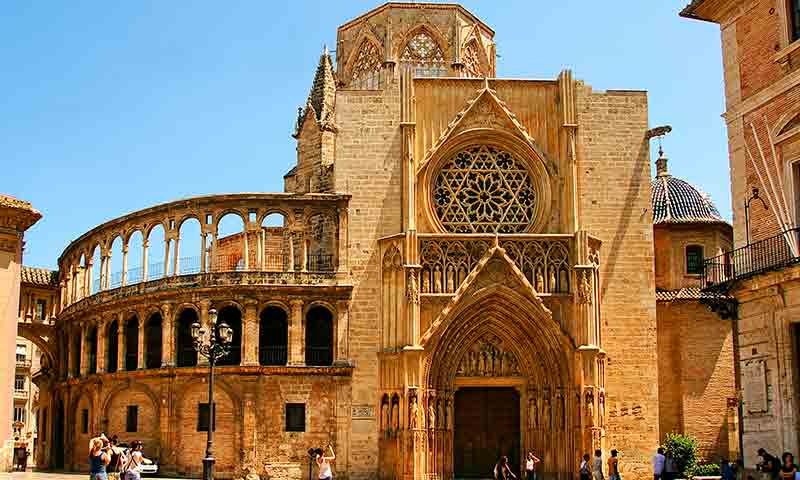
La Catedral de Valencia es uno de los edificios más importantes de nuestra ciudad. Este magnífico edificio, fusionando diversos estilos a lo largo de los años, oculta secretos apasionantes y tesoros artísticos que esperan ser descubiertos. Desde el enigma del Santo Cáliz que se dice que usó Jesús en la Última Cena hasta los frescos renacentistas ocultos durante décadas, la catedral desvela relatos de fe, arte y leyendas. Acompáñanos en un recorrido por los pasillos y las narrativas que han forjado este icónico lugar, donde cada piedra cuenta su propia experiencia. ¿Quieres saber más? Una mezcla de diferentes estilos arquitectónicos La construcción de la Catedral de Valencia se remonta al siglo XIII. Concretamente, la primera piedra se puso en la puerta de la Almoina, el 22 de junio de 1262. El edificio se levantó sobre la antigua mezquita árabe de Balansiya (nombre con el que los musulmanes conocían a nuestra ciudad) que, a su vez, se había, construido sobre la antigua catedral visigótica y por encima de un antiguo templo romano dedicado a Júpiter o Diana. En el siglo XIV, se terminaron sus tres partes más importantes: la Puerta de los Apóstoles, el aula capitular y el cimborrio. Casi un siglo después, se ampliaron sus naves, y en el año 1425 concluyó la construcción del campanario, conocido por los valencianos como «El Micalet». Este curioso nombre se debe a que su campana mayor, que es la que marca las horas, fue bautizada el día San Miguel. Por eso a esta torre también se le llama popularmente «el Miguelete». El Micalet tiene ¡207 peldaños! dispuestos en una escalera de caracol y, si eres valiente y estás en forma, podrás subirlos durante tu estancia en Valencia. En el siglo XVIII la Catedral valenciana tuvo otra gran reforma. Por eso, sus tres puertas principales tienen tres estilos artísticos de tres épocas diferentes: la puerta de la Almoina es románica; la puerta de los Apóstoles, gótica; y la puerta de los Hierros, barroca. Hechos más importantes sucedidos en la Catedral de Valencia Como centro espiritual y de poder la ciudad, la Catedral de Valencia ha sido testigo de importantes hechos históricos. Uno de los más importantes fue la entrega del Santo Cáliz por parte del rey Alfonso V de Aragón, apodado el Magnánimo, el 18 de marzo de 1437. Este día marcó su historia para siempre. De hecho, según la tradición, aquí se conserva desde entonces el Santo Cáliz, un objeto religioso al que se le atribuyen poderes místicos y que ha sido muy venerado y codiciado a lo largo de los siglos. La leyenda es esta: al parecer, San Pedro conservó la copa en la que Jesús bebió después de la Última Cena y la llevó a Roma, donde los sucesivos Papas la custodiaron hasta que, en el siglo III, el emperador Valeriano empezó a perseguir a los cristianos. El Pontífice Sixto III le entregó entonces la reliquia a su diácono de confianza, un hispano (San Lorenzo) que la trajo hasta Huesca y la escondió en un monasterio de los Pirineos. El Santo Cáliz estuvo escondido allí hasta que, en el siglo XIV, fue entregada al rey de Aragón, quien la custodió en Zaragoza. Después, uno de sus sucesores la depositó en la Catedral de Valencia. Otros hechos importantes sucedidos en esta Catedral: aquí fueron designados papas Calixto III y Alejandro VI, el Papa Borgia, y en su altar mayor contrajeron matrimonio, el 18 de abril de 1599, los reyes de España Felipe III y Margarita de Austria. ¿Qué secretos esconde la Catedral de Valencia? Ya hemos hablado un poco de historia, pero, ¿quieres conocer los auténticos tesoros que esconde la Catedral de Valencia? Además del Santo Cáliz, en el interior de este edificio hay importantes de obras de arte. Destacan los frescos del Altar Mayor, que estuvieron ocultos durante muchos años tras unas placas de mármol y que fueron «descubiertos» en 2004 durante las tareas de mantenimiento y limpieza. Estas pinturas al fresco son de estilo renacentista, y muestran a diez grandes ángeles con instrumentos musicales que llaman la atención por sus colores “vivos”. Seguramente, estos trabajos fueron encargados por el Papa Borgia, de origen valenciano. Francisco de Goya Otra de las joyas artísticas que esconde este monumento son dos cuadros de Francisco de Goya, un reconocido pintor español. Las obras abordan la figura de San Francisco de Borja: en una de ellas, el santo se despide de su familia en el Palacio Ducal de Gandía y, en la otra, asiste a un moribundo impenitente. Además de arte, la Catedral de Valencia también es protagonistas historias y leyendas. Por ejemplo, dentro de una urna, se conserva el que dicen es el brazo incorrupto de San Vicente Mártir, patrón de la ciudad que murió torturado bajo el arresto del emperador romano Diocleciano. Puerta de la Almoina En el exterior, hay una puerta que también relata una curiosa leyenda local. Si te acercas al arco principal de la puerta de la Almoina o de los Arcos, la más antigua de la Catedral, verás siete parejas de cabezas. Estas parejas representan a los primeros pobladores que llegaron a Valencia desde Lérida cuando la ciudad fue reconquistada a los musulmanes, en el siglo XIII. Pioneros en vivir en esta tierra nuevamente cristiana, estos catorce nobles llegaron acompañados, según la tradición, de 300 doncellas que se casaron con los soldados del rey Jaime I, el conquistador de la ciudad. Bajo sus cabezas esculpidas en piedra, aparecen escritos sus nombres. ¿Un último dato? Todos los jueves, en la Puerta de los Apóstoles de la Catedral de Valencia, se reúne el Tribunal de las Aguas, uno de los consejos de ciudadanos más antiguos de Europa. En sus sesiones, 8 hombres vestidos de negro discuten en círculo sobre los problemas de las 8 acequias de agua de Valencia. Estas acequias están representadas en la bonita escultura que encontrarás en el centro de la plaza de la Virgen y que está rematada por el río Turia, que aparece esculpido como

¿Qué opinan nuestros alumnos de nuestros cursos de español?


Estas son algunas de las opiniones de nuestros alumnos. ¡Los premios nos los dais vosotros!

Cómo perfeccionar un idioma: 7 consejos prácticos y divertidos 3
Becky111 Avatar
Becky111
5 star rating
A beautiful school with helpful staff I am just back from a week in Valencia studying Spanish at Taronja School. This is a beautiful boutique school. The team at reception are helpful and I loved their speed in replying to emails - they are very good at that. Prior to my visit, as I was travelling solo, I asked questions about the school, the lessons, the type of classes and ages as I was looking for something suitable to over 30 y/o, the accommodation, additional dates and Valencia in general and they were always happy to answer at the speed of light! They are very good at that and it helps when you are in front of your computer, you are tryng to book a flight and you need a quick answer.
The school
Right in the middle of the city centre, great location, near bars, coffee shops, restaurants, metro, bus, taxis, everything really. The entrance is quite understated, the school is located at the first floor of a building. Every class is decorated differently and all have air-con whichis great at this time of the year, when the tempretaure in Valencia is above 32 degree celsius everyday.
All the teachers I had this week were very nice (Isabel, Manu, Sonia), friendly, helpful and they really ensured that we learnt from this experience. The teaching is not based on any book, we were provided with a handout and additional pages during the week to cover the areas which we were going to explore during each lesson. All lessons are interactive with plenty of opportunity to ask 'preguntas' (questions). Internet is used in the school by the teachers to explain words or provide images and other digital tools are also used to write as a board (instead of the out of fashion board and marker). Classes are small, I was in a class of 9. I know that some of the people I met there were in classes of 6 so the classes are of a reasonable small size which is good and allows the teacher to provide full attention to all. Classes last 50 minutes each. You would usually have 2 teachers a day, one for the first two hours of 50 mins each and the second for the remaining 2 hours of 50 mins each.
Oh yes, once you get to your class forget your language as all the teachers will speak to you in Spanish only, which is fine and correct in the approach as you are there to learn Spanish. However, if you are totally unable to understand a meaning of a word or a sentence they will try to tell you the equivalent in English or Italian or French to heelp you.
You may have a T1 or T2 programme. T1 - Monday, Wednesday and Friday morning classes, Tuesday and Thursday afternoon class. T2 - the other way round. I had a T1.
If you want to go to museums or go shopping it may be worth booking some additional days in Valencia so that you will have entire days to visit them as it is a little difficult when you have classes in the morning or the afternoon, you would just be rushing around and the majority of the museums close at 13:00 for the day or some reopen at 16:00 but only few of them.
Weekly activities
I did not participate in all the activities as some were aimed at the younger crowd (I'm not old, just in my early 30s but what may be fun for a 17/18 y/o may be less fun for a 30 y/o - however, it is always great to mix with all ages) but the ones I participated in were the following:
Noche the tapas - Monday:
A little bar not far from the school (can't remember the name) with seats outside-only. One drink included with your 'tapa' but you could not choose which tapas to go for as you were given what came from the kitchen so it was more about luck. I was fine as I am not allergic to any food but one of the girls in my group was allergic to dairy products and she got a ham and Cheese croquette which she could not eat so I and the rest of the group helped her what are friends for!!!
Fiesta de bienvenida con paella - Tuesday
This party for all newcomers was a great idea, a great opportunity to meet other students and the teachers, in a location near the beach. We all met in front of the school and then we all went to the metro, we all bought tickets and then we got to the other end and got the tram, then we walked a bit and got to the location of this bar. The idea per se is very nice but I think more can be done in relation to the place where the 'fiesta' takes place. The bar was just a little run down, the drinks were cheap but we all complained about the quality of them. The Sangria tasted bad, the white wine we wondered why it was sold with ice (?) and tasted bad anyway, a mojito was prepared from a mixer so forget mint leaves, brown sugar etc there was none of that so it didn't taste like a mojito but like something with a little bit of rum and the chupitos (shot) were of an unknown taste. The paella was nice, there was a meat and a vegetarian option.
The music was ok, some was from the 90s (not a problem for those over 30 y/o!) but generally fine.
I think Taronja should consider other options when organising this party in terms of the bar and the quality of the service provided by the bar. The idea of the party is great but the bar 'not so great'.
Noche de Orchata and historia - Wednesday
The Horchata is a typical Valencian drink made with chufas. It looks milky but it's not as it is made of a root (I think). It tastes nice, it is very sweet and it is supposed to be had with fartons which to me are like sweet light bread, to be dipped in the Horchata.
We all met in front of the school with Vito (he is a cool man!) and walked to Mercado de Colon to taste the Horchata, oh, yes, with a little bit of history of some buildings in between. There are several bars were you can have the Horchata in the Mercado so we did not all have to be in the same location. I think we sat in 'Daniel', it was ok.
There were other activities organised by Taronja during the remaining days but I and some others opted out and did our own thing!
30Hood - group for 30+ y/o - great concept and a WhatsApp group was created for 30hood to share ideas, activities etc. However, may be Taronja could consider putting together some activities which may be suitable for those in their 30s? Just a thought
Accommodation
I booked a single room with the school. Taronja provided all the details, map etc of the school, very good service. I had to pick up the keys from a specific location, a beautiful yellow building nowhere near a metro station so you could either come out of Angel Aguillera metro and walk to the building (about 15 minutes walk) or get the taxi service provided by the school at 55 euros or also get a taxi from the aiport which should cost about 25, 26 euros.
When I got to the building I was given the keys for the house and my room and some bedsheets. I was based in Ruzafa. I waited for a taxi which took me to Ruzafa and costed just over 6 euros. My room was beautiful, large, massive window, double bed, a wordrobe, a sofa a big table for at least 4 people, 4 chairs, 2 side tables and lamps. The only issue was the lack of a fan. Valencia is extremely warm in this period and I believe that fans should be provided. Although the room was big the heat made nights and even the the day uncomfortable. A fan or air con should be provided.
My room was quite big but I had a look at that of my other flat-mate/student, I think it was half the size of mine and not very spacious, there was also another room which was an inbetween size. I think I was lucky with the room but I guess what you get may depend on availability.
The apartment had 5 rooms but only 3 were in use, there was no leaving room which was a shame as we had to stand in the corridor to have a chat. The kitchen was very small and would have been impractical if all rooms were taken and all were using the kitchen at once. Luckily it never happened!
The apartment had 2 bathrooms which was quite good and we never queued. However, one of the locks in one of the batrooms didn't work so you had to ensure that you made people aware that you were in there - not an issue though although may be it is best if this is repaired.
Ruzafa is a very nice area for bars, restaurants and there is a nice covered market, Mercado De Ruzafa where you can buy fruit, veg, meat and fish. It is smaller than the central market and there is no sit down bar/restaurant inside of the one in Ruzafa but it is equally good.
The apartment was at a 15 minutes walk to the school, the distance was ok or you could take a bus, line 7, to Xativa which is 1 minute away from the school and the center of Valencia or 2 minutes from Placa de Ayuntamento.
All in a all a great school and I had a great time!!! The teachers are great and the staff at reception are lovely and helpful.
leer más
petersQ3664BU Avatar
petersQ3664BU
5 star rating
Great experience! Great classes, great way to learn new cultures and new people. Just an amazing experience! I highly recommend it to everyone!
leer más
Gideon Hammond Avatar
Gideon Hammond
OVERALL As a school teacher (of Maths and some other things), I had supported the Spanish trip here with my pupils in April 2023. I could see what a transformative experience it was for them so much so that I wanted it for myself. My time at Taronja can only be described as excellent. Everyone at the school tries to ensure you have the best time possible which is impressive based on the carousel of students who come-and-go each week. All the staff treated me with kindness and respect. Thank you to Maxi and Fernando for running such a unique place. The last 4 weeks at Taronja have been exciting, interesting, eventful, busy, enjoyable and compact with information. The last time I studied a language was 14 years ago. I was not very keen on languages in school but my time spent at Taronja has made me believe that I can learn a language to a much higher level than I ever thought possible. That alone has been worth it. LEARNING EXPERIENCE The teachers were fun and engaging. As an absolute beginner, I did the Intensive course + conversation class + private lessons. That helped with my exposure to the language and the private classes were helpful in ironing out some issues. I did this for the first three weeks, then extended by a week and "dropped down" to "only" the intensive course, which is plenty. If I were building up for an exam I would definitely pick up the private classes again. And the conversation classes were energetically delivered to give you important insights of Spanish conversational etiquette. Overall, I was able to enjoy lessons taught by patient, *knowledgeable* and kind teachers, who have reminded me about the importance of these characteristics in my own teaching practice. Teaching beginners must be tough and it was done with grace, style, poise and importantly, a smile. Thank you Laura, Carmen, Antonio, Miguel Angel, Nestor, Carol, Jenny, Nerea, and especially Mica and Paula for your infectious energy and humour. ACADEMIC ADMIN The organisation of the timetable and classes was clearly communicated in advance via WhatsApp. I know some people didn't feel as though they were in the right class for their level and changes were made almost instantly to help. This was managed by the academic team. SUPPORT Organising, arriving, and extending my stay was made very easy by the ladies at the front desk, in particular Elena and Roza! Emails were responded to promptly and they were always so helpful. Waving to them in the morning and getting a wave back made things feel a bit more like home! SOCIAL Plenty of opportunities to socialise with others at the school. Most people I attended school with were between 19-25. But there was also a considerable contingent of older pupils too (e.g. 31, 40 and 70!). This is all taken into consideration when forming classes and social activities. There are activities organised by the school for every day of the week. I went during high season (i.e. the summer) so there were a lot of people. Some activities are linked to other language schools which broadens your pool of potential connections. A lot are free. Many are heavily subsidised. Because there is a fluid change of people from week to week the extent to which you find things socialable will depend on who you share your time at the school with. But similarly minded people would pay money to attend a summer school, so it's likely to be fine for you, as it was for me! As an over-27, I was added to a WhatsApp group for additionally organised activities. BOCARIOS (Interns) An excellently led intern team support the activities and were a good group to talk to in general. Very helpful! GENERAL THOUGHTS When in Spain and doing things, there is a naturally occurring opportunity to practice the language. Whether you decide to is your own choice! And indeed your experience in general heavily depends on you 😇 . Approach it with an open heart and fresh eyes.
leer más
media thumbnail 0media thumbnail 1media thumbnail 2media thumbnail 3media thumbnail 4
Yonatan_Boinet Avatar
Yonatan_Boinet
5 star rating
An Amazing school to learn and live the spanish I (20 yo) was there for two weeks for an intensive course in spanish. It was amazing!! The courses are divided in two, with two different teachers. I had the opportunity to meet 4 of them which were all amazing. The school teaches through ludic activities which allows to learn how to really speak and write spanish well. Also Taronja does a lot of activities during the week and on saturdays. The activities are a great way to meet people and learn spanish culture / see amazing landscapes (Saturdays).
leer más
media thumbnail 0media thumbnail 1media thumbnail 2
GrandTour674533 Avatar
GrandTour674533
5 star rating
Very Worthwhile It's been 50 years since I went to 'school' and it was with much trepidation that I booked to go to the Taronja school. I had imagined that I would be the old man amongst youngsters in the class, but although I was the oldest there, I found we represented a good cross section of ages.
The first couple of hours in class was rather difficult, but that was because I felt a long way behind the other students regarding ability. There were 2 reasons for this, firstly the first subject of the day was about regular and irregular verbs, which is, at least for me and some of the others, difficult, but I soon began to make headway thanks to the excellent teacher. Secondly, I really should have attended the previous week as well; purely my mistake when I booked online.
When I look back at the week at the Taronja school and the amount I have learnt I am very impressed and I would go back for more but unfortunately it's a very long way from home and being a family man I just can't justify it but if it was within daily travelling distance I would be happy to spend many weeks there. I am considering using their online courses, but we'll see.
For anybody thinking about going to the Taronja school, just do it!
leer más
Gosia Gniadek Avatar
Gosia Gniadek
Great classes, tona of extra activities and school parties like: Tapachat or Paella Party, Fiesta Mexicana on the beach. Ecery week on weekend there are some bigger tripa organised. It os super easy to make friends. It first I was afraid I won’t find friends my age at the school, age variety is huge so everyone easy gets along with others.
leer más
Seha Liah Avatar
Seha Liah
Tout !!!...
Les profs, les organisateurs, l'ambiance, les cours, les activités extra-cours, tout est génial !!! allez y ! 😀 <3
leer más
Mr Y Mr Y Avatar
Mr Y Mr Y
Highly recommended language school to learn Spanish in Valencia! A great range of cultural & social activities as well as parties & events appropriate to the time, season & location. This is my second time here studying Spanish & I have not only improved my confidence to articulate myself both written & verbally, but been open to new ideas & new cultures & perspectives from around the Spanish speaking world- muchos gracias!
leer más